
-
Clinical continuity at the heart of the process
Every file is handled directly by Dr. Diab, from the first meeting through to the delivery of results. This clinical continuity makes it possible to integrate each observation session by session, adjust the process as needed, and produce a nuanced reading of the profile that goes beyond raw test scores.
Neuropsychologist in Montreal, neuropsychological assessments and evaluations
Your Neuropsychologist in Montreal
For your child, for yourself, or for an aging loved one, a neuropsychological assessment turns questions into precise clinical answers. It leads to a comprehensive report and recommendations that can be applied at school, at work, or at home.
Neuropsychological assessment
A complete clinical process, from first contact to final report
A neuropsychological assessment builds a precise picture of cognitive functioning by exploring attention, memory, learning, language, and executive functions. Each assessment combines a clinical interview, standardized testing, and in-depth analysis to produce a complete picture of the cognitive profile and the factors that shape it. The final report presents the strengths and difficulties observed, confirms or rules out a diagnosis, and sets out recommendations that can be put into practice right away.

Areas of assessment
Each condition calls for its own clinical perspective.
Each of the conditions below can be a reason for a neuropsychological assessment. The reasons for consulting vary, from a persistent difficulty at school, to a diagnosis that needs clarifying, to a return to normal life after a concussion, to a cognitive concern related to age. In every case, the assessment offers a clinical response tailored to the specific situation.
ADHD

ADHD
A profile involving attention, impulsivity, and sometimes hyperactivity. The assessment clarifies the profile and distinguishes ADHD from comorbid or related causes.
Autism Spectrum Disorder

Autism Spectrum Disorder
Differences in social communication, interests, and sensory processing. Standardized diagnostic tools such as the ADOS-2 are integrated into the process.
Giftedness
Giftedness
Above-average intellectual functioning, identified using the Wechsler scales. Often associated with an atypical cognitive profile and adaptation challenges.
Twice-Exceptional
Twice-Exceptional
Giftedness coexisting with ADHD, ASD, or a learning disability. An integrated assessment captures a profile that looking at a single condition alone would miss.
Learning Disabilities

Learning Disabilities
Dyslexia, dysorthographia, dyscalculia, and dysgraphia. The report can support a request for accommodations in elementary school, high school, CEGEP, or university.
Dyspraxia
Dyspraxia
Developmental Coordination Disorder, in its verbal, motor, or visual-spatial forms. It can affect handwriting, fine motor skills, and the organization of movement.
Intellectual Disability
Intellectual Disability
Significant limitations in intellectual functioning and adaptive behavior, documented according to DSM-5 clinical criteria.
Concussions
Concussions
Cognitive after-effects of a mild traumatic brain injury. The assessment documents any lasting effects and guides a gradual return to work, school, or sport.
Neurodegenerative Disorders

Neurodegenerative Disorders
Alzheimer’s disease, Parkinson’s disease, Lewy body dementia, frontotemporal dementia. Differential diagnosis to help guide the care plan.
Mild Cognitive Impairment
Mild Cognitive Impairment
Cognitive decline that is more pronounced than normal aging, without loss of independence. Early detection opens the door to longitudinal follow-up.
Who the assessments are for
An approach tailored to the person being assessed
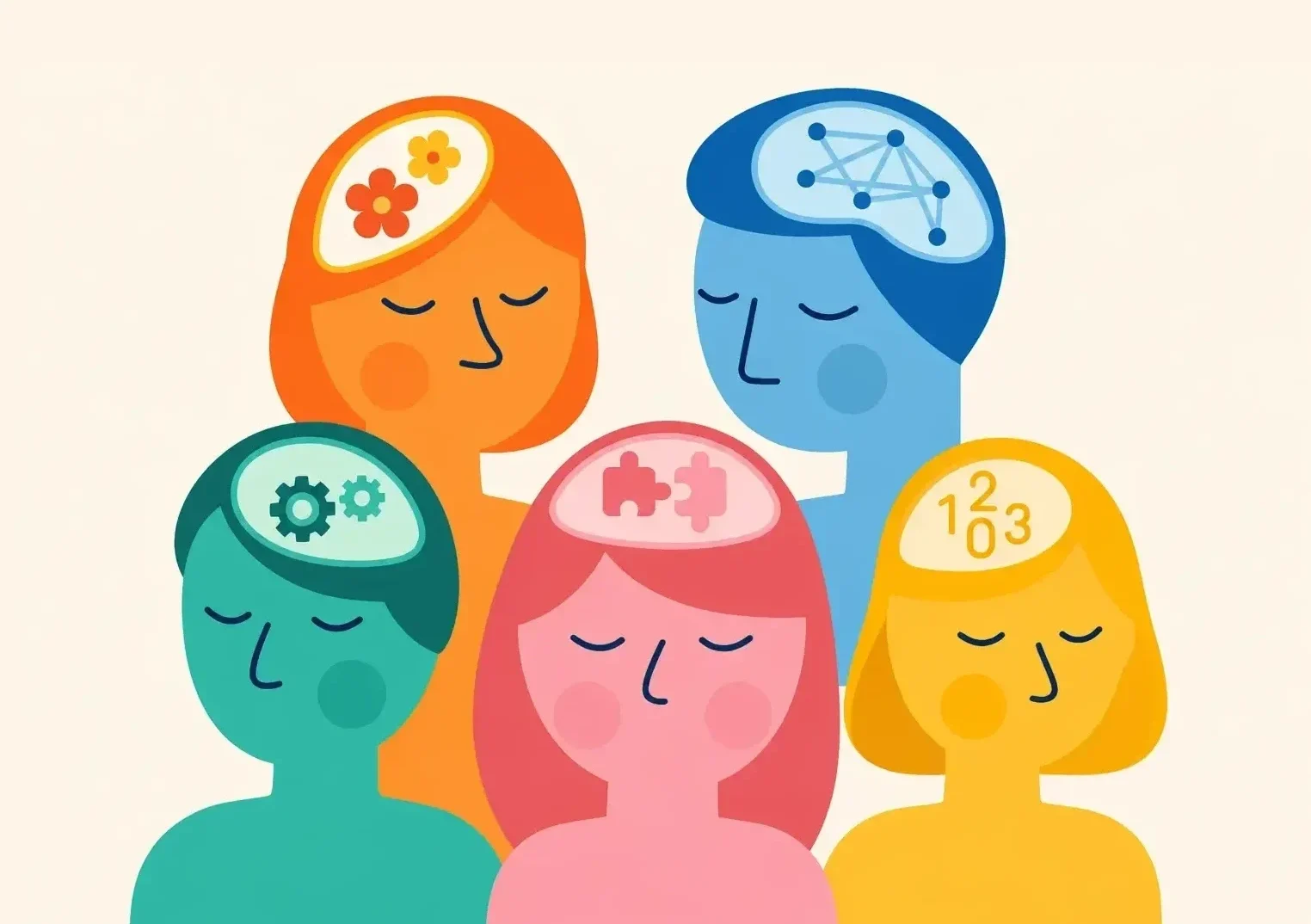
The goals and tools of the assessment differ depending on whether the person being assessed is a developing child or an adult facing new questions about their cognitive functioning.
For your child or teen
If your child shows difficulties with attention or learning, relational differences, or a different cognitive pace, an assessment can help clarify their profile. The results guide interventions at school, at home, and with the professionals around them.
For you, as an adult
An assessment in adulthood can confirm a diagnosis long suspected, clarify the source of difficulties at work or in school, or document cognitive decline. Many people discover their cognitive profile later in life and find it a source of relief and concrete strategies.
Before you consult
The questions most often asked by patients and families
If your question isn’t on this list, reach out directly to discuss it.
A psychologist supports difficulties through psychotherapy. A neuropsychologist additionally evaluates the brain’s cognitive functioning using standardized tests and diagnoses conditions such as ADHD, ASD, or learning disabilities.
People consult to clarify a suspected diagnosis, understand the source of attention, memory, or learning difficulties, or document a cognitive profile in order to obtain accommodations. Parents often consult for their child following a concern raised at school. Adults tend to consult after years of unexplained difficulties at work or in their studies.
An assessment provides a precise picture of cognitive functioning, from attention to memory to reasoning. It confirms or rules out a diagnosis and results in a written report containing concrete recommendations for school, work, or the professionals involved.
No medical referral is required to consult in private practice. Some private insurance plans may however require one for reimbursement. It is recommended to check with your insurer before the first meeting.
Most private insurance plans partially or fully cover assessments conducted by a psychologist who is a member of the OPQ. Fees are also eligible for the medical expense tax credit in Québec. It is recommended to check the exact terms with your insurer before the first meeting.

In collaboration with
Evolution Thérapie is a multidisciplinary clinic that offers specialized services in occupational therapy, addressing motor skills, emotional regulation, executive functioning, and sensory processing and regulation.
Dr Sabrina Diab, neuropsychologist, collaborates with Évolution Thérapie to provide professional support tailored to each client’s needs.