
-
And Asperger Syndrome
Since the DSM-5 was published in 2013, the former diagnosis of Asperger Syndrome has been folded into the single category of Autism Spectrum Disorder. People previously diagnosed with Asperger’s, or adults who recognize this profile without a formal diagnosis, now fall under ASD without intellectual disability, with a level of support that varies by situation. Current assessment uses the DSM-5 framework while taking the person’s earlier history into account.
See the world differently, understand it deeply.
Autism Assessment (ASD) in Montreal
Autism Spectrum Disorder presents in many different ways, from childhood through adulthood, and many people discover it later in life. Clinical assessment brings clear structure to what had, until then, remained a set of signs that were difficult to name.

What is ASD
Autism Spectrum Disorder as understood in current clinical practice
Autism Spectrum Disorder (ASD) is a neurodevelopmental condition marked by persistent differences in communication and social interaction, restricted interests and repetitive behaviors, and often atypical sensory sensitivity. The term spectrum reflects the wide diversity of presentations, from ASD with significant support needs to ASD with strong cognitive abilities. These differences appear from early childhood, although they may not be recognized until much later, sometimes in adolescence or adulthood.
ASD and ADHD
A frequent co-occurrence that calls for a precise clinical eye
About 30 to 50 percent of autistic people also have attention deficit hyperactivity disorder, according to recent studies. When the two co-occur, they influence each other and the clinical picture becomes more complex to untangle. Assessment distinguishes the attention difficulties specific to ADHD from the cognitive and social differences specific to ASD, which guides the recommendations. When the person also has high intellectual potential, the process falls under twice-exceptionality, a profile documented on its own dedicated page.
Signs to Watch For
What may point to the need for an ASD assessment
Below are signs commonly observed that, when persistent and present across multiple settings, may justify a clinical assessment.
- Difficulty picking up on implied meaning, irony, facial expressions, or nonverbal language
- Intense, focused interest in one or a few specific subjects, beyond what is typical for the person's age
- A strong need for routine and predictability, with significant discomfort around change
- Unusual sensory sensitivity to sounds, textures, lights, or smells
- Significant social fatigue after group interactions, even brief ones
- A persistent feeling of being out of step with others, or the sense of always having to perform socially
- Difficulty starting or maintaining friendships despite wanting them
- A history of anxiety, depression, or eating disorders that has not responded to typical treatment
The Clinical Tools Used
What the in-office ASD assessment includes
The assessment combines several recognized clinical tools to document the profile and establish a reliable diagnosis.
01
Clinical Interview and Developmental History
A detailed review of the person’s developmental history, social interactions, interests, and behaviors since early childhood. The interview also documents common co-occurring conditions, particularly anxiety and mood difficulties.
02
ADI-R Diagnostic Interview or Equivalent
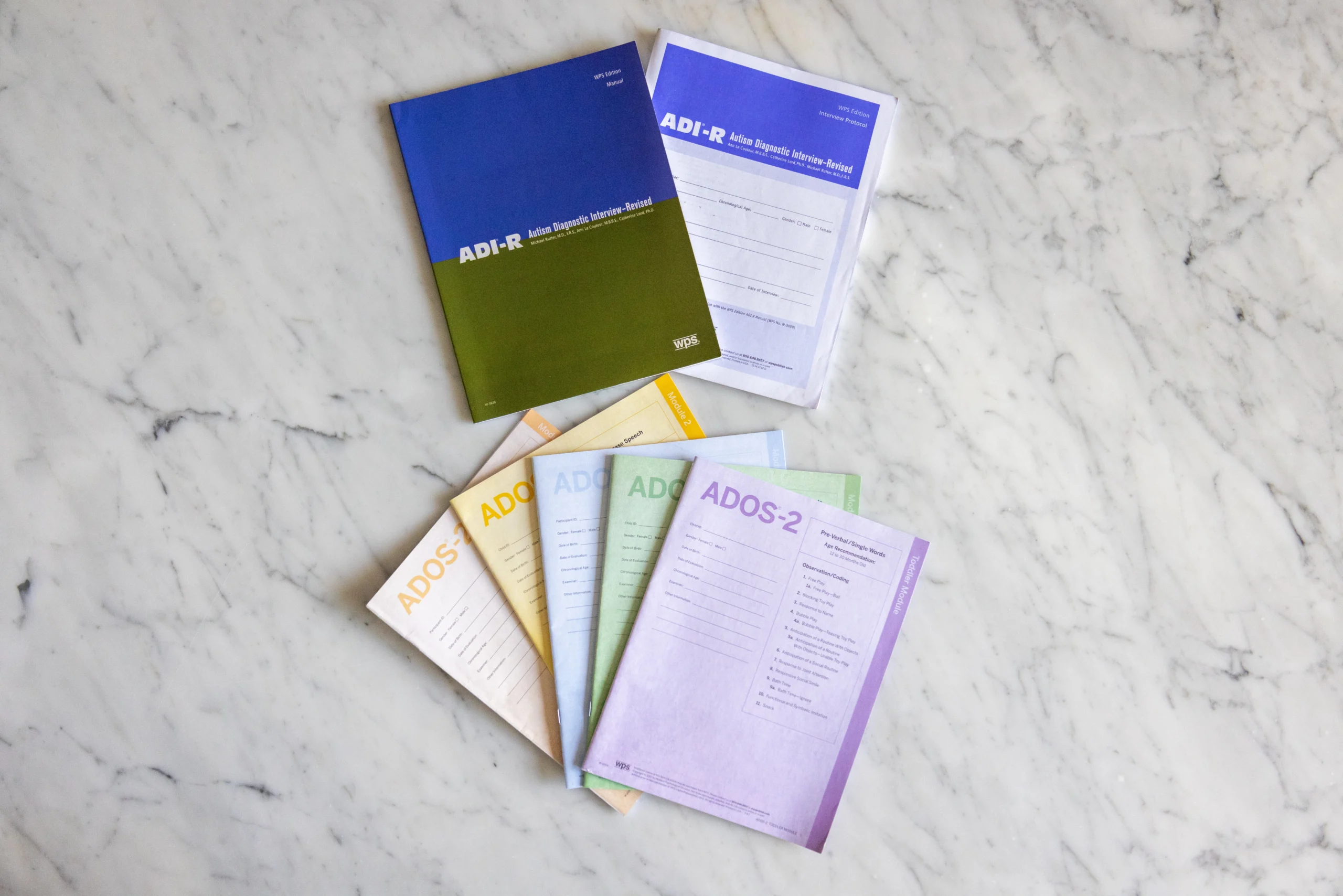
The Autism Diagnostic Interview, Revised is a semi-structured interview conducted with a parent or close family member who knew the person being assessed during childhood. It documents significant behaviors according to diagnostic criteria.
03
ADOS-2 Observation
The Autism Diagnostic Observation Schedule is the reference clinical observation tool. It is administered directly to the person being assessed, using a module suited to their age and language level.
04
Cognitive Assessment and Integrated Analysis
Standardized measures of intellectual functioning, attention, and executive function. Findings are integrated to distinguish ASD from other possible profiles and to develop individualized recommendations.
Before you consult
The Most Common Questions About ASD Assessment
If your question isn’t on this list, reach out directly to discuss it.
Yes. An ASD diagnosis can be made at any age. More and more adults are seeking assessment after recognizing their own profile, often following a child’s diagnosis, a loved one’s diagnosis, or personal reflection. The assessment documents the continuity of signs since childhood, a DSM-5 criterion, based on the history reported by the person being assessed and their loved ones.
Autism Spectrum Disorder is a neurodevelopmental condition that affects social communication, reciprocity in interactions, interests, and behaviors. Its manifestations vary widely from person to person, which is why the term spectrum is used. ASD is present from childhood but can be identified much later in development or in adulthood.
Since the publication of the DSM-5 in 2013, Asperger’s syndrome is no longer a distinct diagnosis. It was integrated into the broader ASD category. People previously diagnosed with Asperger’s generally correspond to ASD without intellectual disability or language delay. Current assessment uses the DSM-5 framework while recognizing the person’s prior diagnostic history.
Yes. ADHD and ASD frequently coexist, in approximately 30 to 50 percent of cases according to recent studies. The clinical assessment distinguishes the features specific to each condition and documents their overlap. When the person also shows high intellectual potential, this may indicate a twice-exceptional profile.
The process combines an in-depth clinical interview, a structured developmental interview, direct observation using the ADOS-2 when the tool is relevant, and an evaluation of cognitive functioning. The clinical report brings together all observations and is delivered during a videoconference meeting.
Most private insurance plans partially or fully cover assessments carried out by a psychologist who is a member of the Ordre des psychologues du Québec. Fees are eligible for the federal and provincial medical expense tax credit. The exact terms vary from plan to plan and should be confirmed with your insurer before the first appointment.